Most sales teams do not have a lead problem. They have an execution problem. Leads sit too long, follow-ups happen late, reps spend hours on repetitive tasks, and good opportunities go cold because nobody had time to send the next message. That is where the answer to what is sales automation becomes practical, not theoretical.
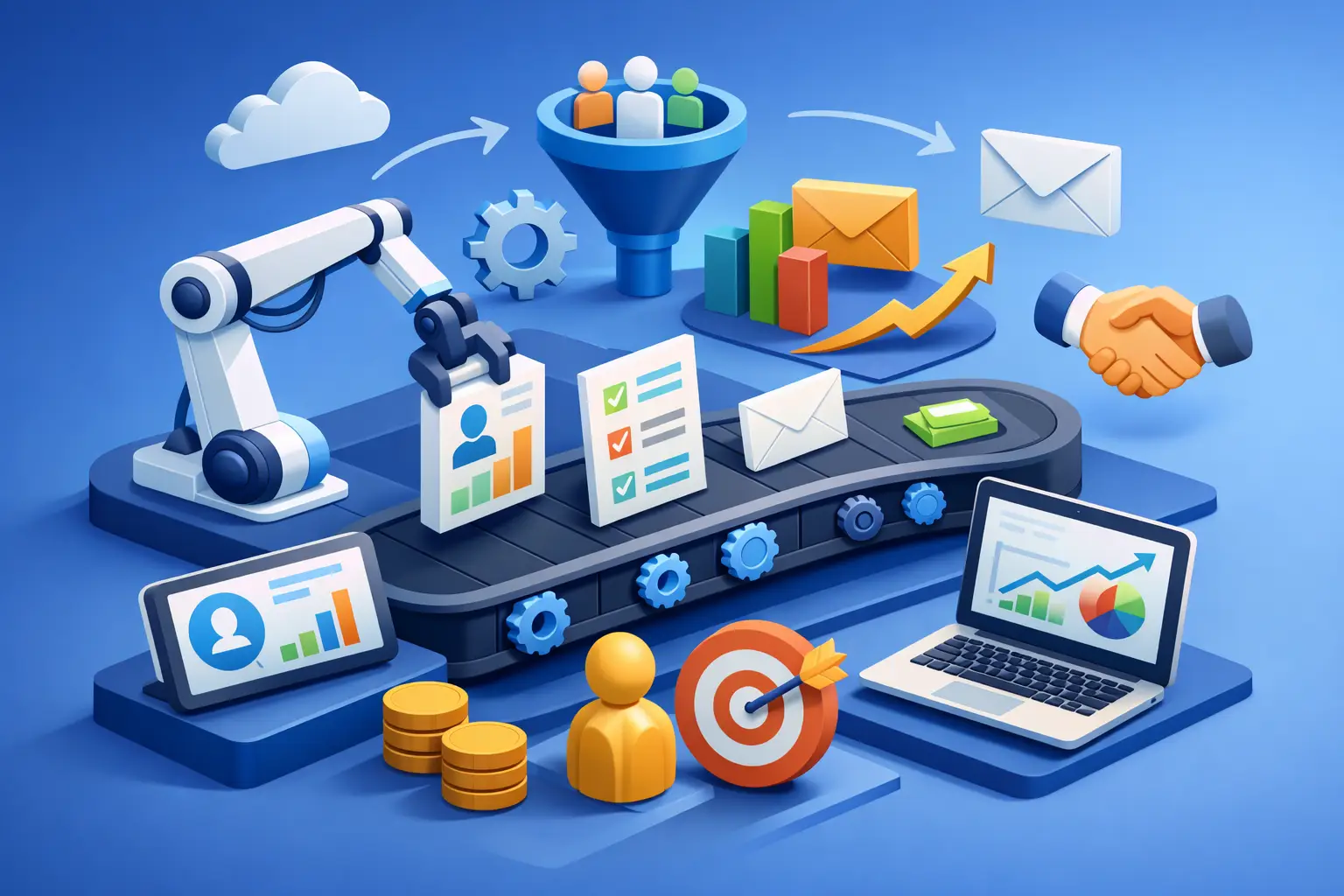
Sales automation is the use of software and AI to handle repeatable sales tasks without constant human involvement. That can include finding prospects, sending outbound emails, replying to common messages, updating CRM records, assigning leads, triggering follow-ups, and booking meetings. The goal is simple: create more sales activity with less manual work.
For a founder, sales manager, agency owner, or broker, that matters because growth usually breaks at the same point. You need more pipeline, but hiring more SDRs adds cost, training time, management overhead, and inconsistent output. Automation changes that equation by turning routine sales work into a system.
What is sales automation in real terms?
A lot of people hear the phrase and picture a few email templates or a basic CRM workflow. That is only part of it. Real sales automation is broader. It connects prospecting, outreach, follow-up, qualification, and scheduling into one process that runs on rules, triggers, and now increasingly, AI agents.
In real terms, sales automation means your business no longer relies on someone remembering every next step. If a lead downloads something, they can be routed into a sequence. If a prospect replies with interest, they can get a fast response and a booking option. If nobody answers after the first touch, the system continues the follow-up cadence automatically.
This is why automation has become a revenue tool rather than just an admin feature. It does not only save time. It protects pipeline from human inconsistency.
What sales automation actually covers
The best way to understand it is to look at the jobs it takes off your team’s plate. Sales automation commonly handles lead capture, contact enrichment, outbound sequencing, task creation, reply routing, meeting scheduling, CRM updates, reminders, and re-engagement campaigns.
Some systems are rule-based and narrow. They send a preset sequence and stop there. Others are more capable and can operate like digital sales support. AI-powered systems can personalize outreach at scale, respond across channels, qualify interest, and keep conversations moving after hours.
That difference matters. If your current setup only automates one step but leaves your team manually handling the rest, you still have bottlenecks. Strong sales automation removes friction across the full motion, not just the first email.
Why businesses adopt sales automation
The biggest reason is capacity. Most teams simply cannot keep up with the volume required to generate predictable outbound results. Effective prospecting needs research, messaging, persistence, speed to lead, and constant follow-up. Manual teams usually do some of this well, some of it late, and some of it not at all.
Automation gives you consistency. Every lead gets a process. Every follow-up happens on time. Every handoff is tracked. That consistency is often more valuable than adding another rep, especially for smaller companies where one missed day can mean a thin pipeline next month.
The second reason is economics. Hiring human SDRs is expensive before they produce anything. There is recruiting, onboarding, tools, management, churn, and quality control. Automation lets businesses scale activity without scaling headcount at the same rate.
The third reason is speed. Buyers reply when it is convenient for them, not when your team is online. Automated systems can respond immediately, route conversations, and offer booking options at any hour. That can be the difference between a booked demo and a lost lead.
Where sales automation works best
Sales automation is especially strong in environments where volume, timing, and persistence matter. Outbound prospecting is a clear fit because it requires repeated touches across a large list. Appointment booking is another because fast response and tight scheduling windows directly affect conversion.
It also works well for businesses with long follow-up gaps. Real estate teams, agencies, SaaS companies, and service businesses often lose deals not because demand is weak, but because nobody consistently works the middle of the funnel. Automation keeps those leads warm.
That said, it is not equally useful in every sales motion. Highly complex enterprise deals still need experienced humans for discovery, negotiation, and relationship management. Automation can tee up meetings and handle process work, but it should support the closer, not replace strategic selling.
The difference between automation and spam
This is where a lot of teams get it wrong. They confuse automation with blasting thousands of generic messages. That is not a sales system. It is just faster bad outreach.
Good sales automation is structured, relevant, and measured. It uses better targeting, cleaner data, stronger timing, and tighter messaging. It should help you send the right message to the right prospect at the right stage, then react based on behavior.
If the inputs are weak, automation will amplify the weakness. Poor targeting becomes more poor targeting. Bad messaging becomes more bad messaging. So the trade-off is clear: automation improves scale, but only if strategy and positioning are already grounded in reality.
How AI changes what sales automation can do
Traditional automation followed simple rules. If X happens, do Y. That is still useful, but AI pushes it further. Instead of only triggering tasks, AI can generate messaging, interpret replies, prioritize leads, and keep conversations moving without a person stepping in every time.
That changes the labor model. Instead of hiring more people to do repetitive prospecting work, businesses can deploy AI agents that handle outreach and appointment-setting around the clock. For teams that need booked meetings more than they need a large SDR org chart, that is a meaningful shift.
Apps2Grow is built around that operating model. Rather than treating AI as a nice add-on, it uses agent-based systems to execute lead generation, outbound prospecting, and demo booking as practical revenue work. For operators focused on output, that is the right frame.
Common use cases that drive ROI
The ROI usually shows up in a few places first. One is outbound volume. Teams can contact more qualified prospects without adding manual labor. Another is response speed. Automated follow-up catches interest while it is fresh.
A third is meeting conversion. When outreach, qualification, and scheduling are connected, fewer prospects drop between steps. A fourth is cleaner pipeline management because CRM updates and task routing happen automatically instead of depending on rep discipline.
There is also a hidden gain that many teams underestimate: focus. When reps are not buried in admin work and repetitive follow-up, they can spend more time on discovery calls, demos, proposals, and closing.
What to watch before you implement it
Sales automation is powerful, but it is not self-correcting. If your offer is weak, your list is poor, or your message is off, automation will not save the motion. It will just make failure happen faster and at greater scale.
You also need to be clear on ownership. Who handles warm replies? What counts as a qualified lead? When should a human step in? The best systems have clear rules for automation and clear rules for human takeover.
Tool sprawl is another issue. Many companies stack a CRM, sequencing tool, scheduler, enrichment platform, chatbot, and reporting tool, then spend months trying to connect them. In practice, simpler systems with direct business outcomes often outperform more complicated setups.
How to tell if your business is ready
If your team misses follow-ups, struggles to maintain outbound consistency, depends too heavily on one rep, or needs more booked meetings without adding headcount, you are likely ready for sales automation.
You are also a fit if your sales process includes repeatable steps. Automation works best when there is a clear path from target account to first contact to qualification to meeting booked. The more repeatable the motion, the stronger the upside.
If every deal is custom from the first touch and requires deep founder involvement immediately, the value may be narrower. Even then, automating lead capture, reminders, and scheduling can still remove friction.
What is sales automation really buying you?
At the surface level, it buys time. At a deeper level, it buys consistency, coverage, and leverage. It gives your business a way to create pipeline without tying growth to how many repetitive tasks your team can push through in a day.
That is why the question is not just what is sales automation. The better question is what happens to your revenue when outreach, follow-up, and booking run on a system instead of memory, effort, and good intentions.
For most growing businesses, that shift is not about replacing sales. It is about removing the manual drag that keeps sales from performing the way it should. The teams that move first usually do not win because they have more people. They win because their pipeline machine actually runs.