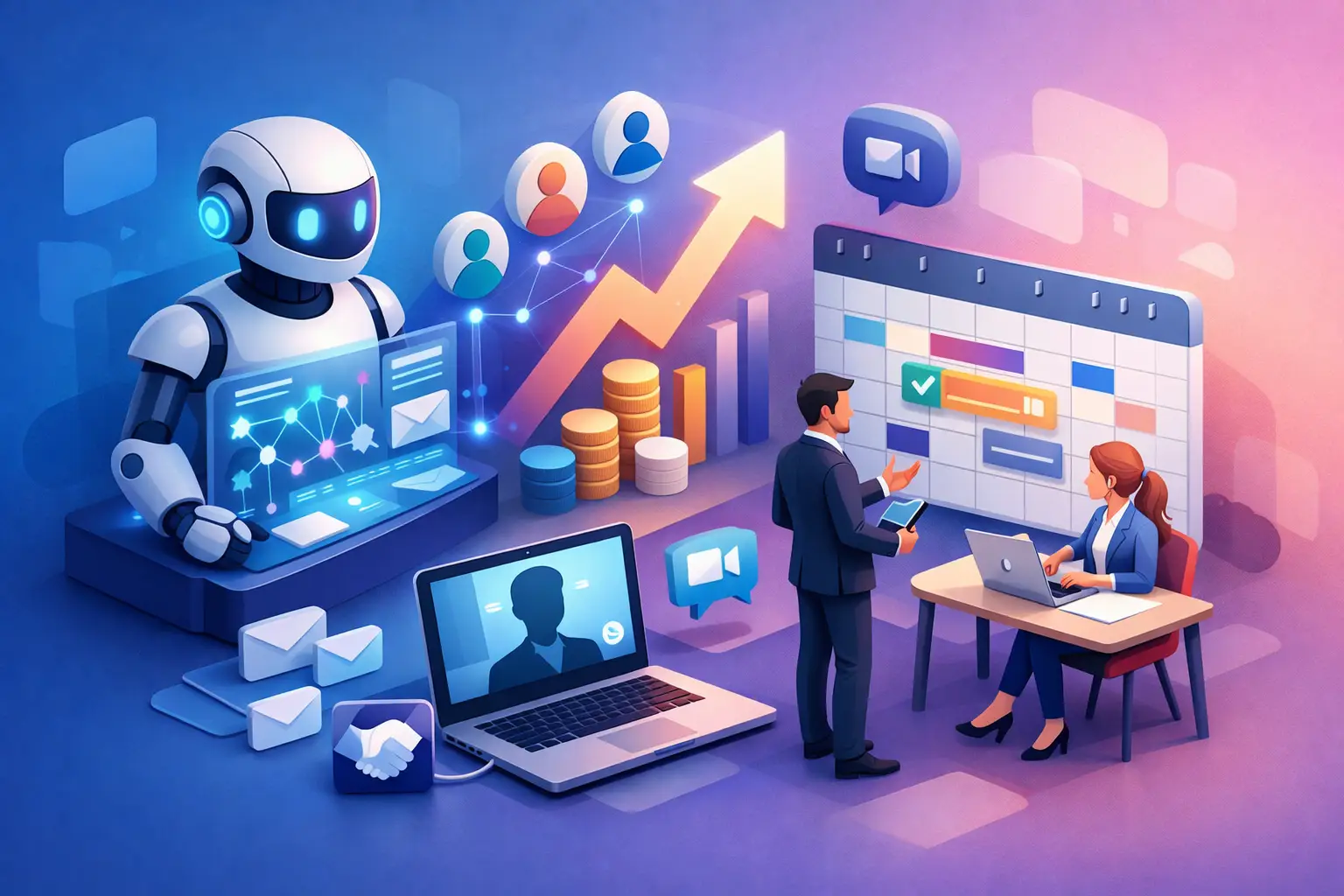
Most teams do not have a lead problem. They have an execution problem. Prospects sit in the CRM untouched, follow-ups happen late or not at all, and outbound dies the moment the team gets busy. That is where ai powered demand generation changes the math. It turns demand gen from a campaign calendar into a system that creates pipeline every day.
For founders, sales managers, agencies, and brokers, that matters because pipeline is not built by strategy decks. It is built by volume, timing, message relevance, and relentless follow-up. Human teams can do this well for a while. They rarely do it consistently at scale without high cost, management overhead, and gaps in coverage.
What ai powered demand generation actually means
At a practical level, ai powered demand generation is the use of AI systems to identify prospects, personalize outreach, run multistep engagement, respond quickly, and move qualified leads toward a booked conversation. The goal is not more activity for the sake of activity. The goal is more pipeline with less manual labor.
A lot of companies still treat demand generation as a top-of-funnel marketing function. That view is too narrow. In real revenue teams, demand generation includes outbound prospecting, lead qualification, follow-up cadence, reactivation, and appointment setting. If any one of those breaks, revenue slows down.
AI changes this because it can operate across the full motion, not just one task. It can enrich contact data, draft messages, trigger outreach sequences, detect responses, route opportunities, and keep conversations moving after hours. That creates leverage where most teams usually lose momentum.
Why traditional demand gen breaks down
The old model depends on hiring more people to produce more outreach. That sounds reasonable until you look at the cost and inconsistency. SDR hiring is expensive. Training takes time. Ramp is uneven. Turnover is common. And even a strong rep can only manage so many conversations at once.
There is also the management burden. Someone has to review messaging, monitor activity, fix process gaps, check CRM hygiene, and make sure no lead goes cold. For a small or mid-sized business, this is where demand generation becomes heavy. The team spends more time managing the engine than benefiting from it.
Then there is the follow-up problem. Most opportunities are not lost because the market said no. They are lost because nobody replied fast enough, nobody followed up enough times, or outreach stopped after the first touch. That is not a market issue. It is an operating issue.
Where AI delivers real revenue impact
The strongest use case for AI is not replacing strategy. It is replacing the repetitive sales execution that stalls growth. That includes prospect research, first-touch outreach, reply handling, scheduling, and the kind of persistence that most teams promise but rarely sustain.
When done well, ai powered demand generation increases output in three ways. First, it raises activity without adding headcount. Second, it improves response speed, which directly affects conversion. Third, it keeps follow-up running continuously, including nights and weekends if your market demands it.
That last point is often underestimated. Speed to lead matters, but speed to follow-up matters too. Buyers compare options fast. If your team takes 18 hours to respond and a competitor replies in 5 minutes, your offer may never get a fair shot.
AI powered demand generation is not just another tool stack
This is where many buyers get confused. They think they need one tool for leads, one for sequencing, one for email writing, one for scheduling, and a person to hold it all together. That usually creates more admin, not more pipeline.
A better model is an agent-based system that acts like a revenue operator. Instead of giving your team more dashboards, it handles prospect engagement and meeting booking directly. That is a meaningful shift. You are no longer just buying software features. You are buying sales execution.
For businesses that need predictable meetings without building a full SDR department, this matters more than flashy AI claims. The real question is simple: does the system produce qualified conversations consistently and at a lower cost than the manual alternative?
What good ai powered demand generation looks like
A good system starts with targeting. If your ICP is sloppy, automation just helps you miss faster. AI should help narrow the right accounts, roles, locations, and signals so outreach goes to people with a reason to care.
Next comes messaging. Personalization does matter, but not in the exaggerated way vendors pitch it. Most prospects do not need a poem about their recent LinkedIn post. They need a clear reason to reply. AI should support message relevance, concise copy, and testing at scale. Overpersonalization can actually slow the system down without improving conversion.
Then comes cadence. One message rarely wins. Good demand gen uses structured follow-up across multiple touches while keeping tone professional and direct. AI is especially useful here because it does not forget, does not get distracted, and does not stop at touch two.
Finally, there is qualification and booking. This is where demand generation turns into revenue generation. If the system can handle initial replies, identify intent, and move interested prospects into scheduled meetings, you remove one of the biggest friction points in outbound.
The trade-offs leaders should understand
AI is not magic, and bad implementation creates bad outcomes faster. If the offer is weak, the targeting is off, or the messaging sounds generic, automation will expose the problem. That is useful, but it can be expensive if you expect the software to fix a broken go-to-market motion on its own.
There is also a brand risk if teams over-automate without guardrails. Low-quality outbound still feels low quality, whether a rep sent it or an AI agent did. The answer is not avoiding AI. The answer is using it with clear rules, strong positioning, and a conversion-focused workflow.
It also depends on your sales cycle. If you sell a high-ticket service with a complex buying committee, AI should handle prospecting, early engagement, and scheduling, while humans take over deeper qualification and deal strategy. If you sell a straightforward service with a short sales cycle, AI can carry much more of the motion end to end.
How to evaluate an AI demand gen system
Start with revenue outcomes, not feature lists. You want to know how many qualified meetings it can produce, how quickly it launches, and what level of manual involvement is still required from your team.
Ask hard questions. Does it only help write messages, or does it actually run outreach? Does it manage replies and book meetings, or does it stop at sending? Can it operate continuously, or does it still rely on human bottlenecks? Most importantly, is it cheaper and more consistent than hiring more SDR capacity?
This is why productized, execution-focused systems stand out. A platform like Apps2Grow positions AI agents as practical operators, not assistants waiting for instructions. That framing is closer to what buyers actually need. They do not need another tool to supervise. They need pipeline activity that gets done.
Who benefits most from ai powered demand generation
The biggest gains usually show up in teams with clear offers and inconsistent execution. That includes agencies that need more booked calls, B2B service companies trying to create repeatable outbound, startups that need pipeline before they can justify hiring an SDR team, and real estate operators who cannot afford missed follow-up.
These businesses often hit the same ceiling. The founder is still involved in prospecting, or a small team is trying to juggle selling, fulfillment, and follow-up at the same time. AI helps by turning demand gen into an always-on operating layer instead of another task on an already overloaded team.
That does not mean every business should automate immediately. If your offer is unclear or your market is unproven, fix that first. But once the basics are there, waiting too long to automate usually means losing ground to teams that respond faster and execute more consistently.
The companies getting ahead are not the ones talking most about AI. They are the ones using it to remove delays, increase outreach coverage, and keep meetings flowing without adding more sales headcount. That is the real value of ai powered demand generation. It is not about sounding innovative. It is about building a pipeline engine that shows up every day, even when your team cannot.